Cardboard Boxes
Single Wall Boxes
Double Wall Boxes
Tall & Narrow Boxes
Large Letter & Small Parcel Boxes
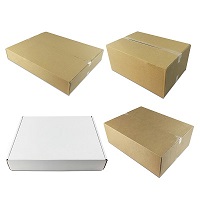
White Postal Boxes
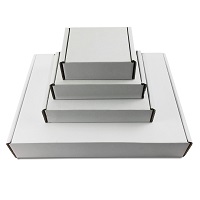
E-Commerce Crash Lock Boxes
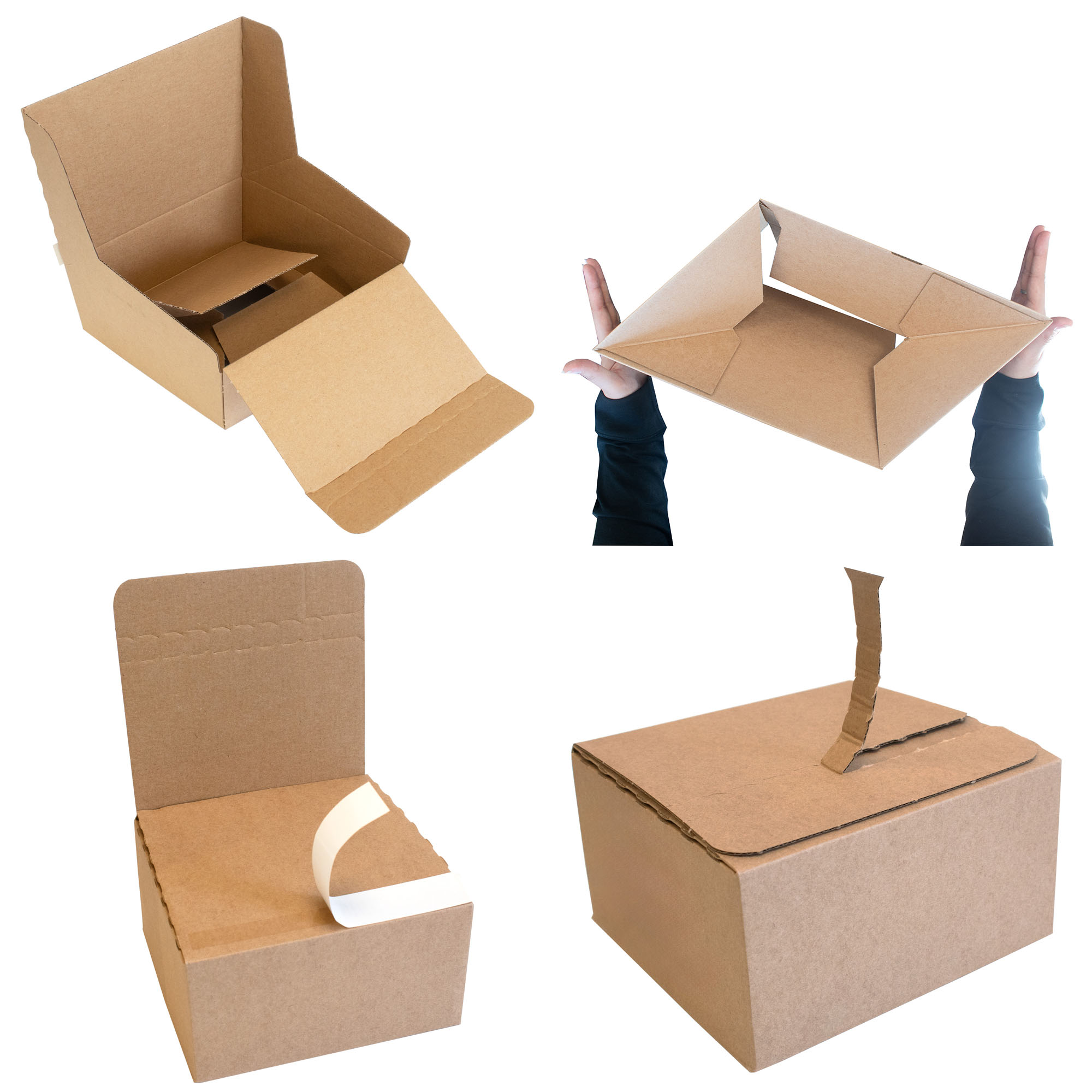
M-Envelope Boxes
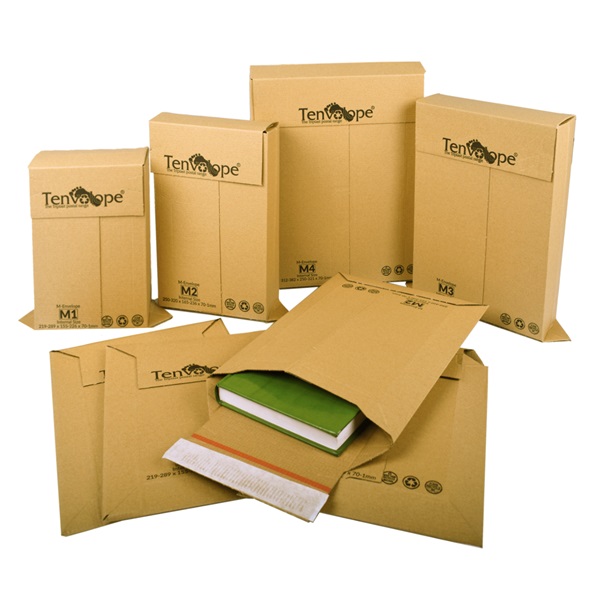
Book Wrap Mailers
Archive Boxes
Shell & Slide Foam Lined Boxes
Wardrobe Boxes
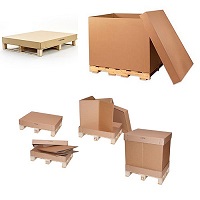
Pallet Boxes
Cardboard Boxes for Shipping, Storage and House Moves
Packaging Express supplies cardboard boxes for businesses and households, covering shipping, storage, e-commerce dispatch, archiving and house moves. The range includes single wall and double wall boxes, postal and courier boxes, book wrap mailers, archive boxes, wardrobe boxes, pallet boxes and removal kits.
The right box comes down to three things: the size of what you are packing, how much it weighs, and how far it is travelling. A box that is too large invites movement and needs filling. A box that is too weak collapses under load, or under the weight of whatever is stacked on top of it.
If you are buying packaging boxes for the first time, or looking for Boxes for Moving House, the sections below explain how the box types differ and which jobs each one suits.
How to choose the right cardboard box
Board strength carries weight. Box size controls movement. Closure type affects packing speed. Protective materials guard the contents inside. These work together, and the box alone is only part of the job.
Four questions will usually narrow it down.
How heavy is the contents?
Single wall cardboard suits lighter, everyday items. Double wall boxes has two layers of fluting and is the choice for heavy goods, stacked storage and anything travelling through a courier network more than once.
How big is the item, and how much space is left over?
Measure the item and choose a box that fits with a small margin on each side for cushioning. Excess space means more void fill, more weight and more chance of damage.
Where is it going?
A parcel handled by one courier faces different risks from a pallet load crossing several depots, or a box sitting in storage for two years. Longer journeys and longer storage both point towards stronger board.
How many are you packing?
If you dispatch the same item repeatedly, a purpose-made box such as a Royal Mail sized carton, a crash lock box or a book wrap mailer will save time on every order compared with a standard carton and tape.
Boxes are rarely used alone. Bubble wrap, foam and void fill protect the contents, while tape and labels close and identify the carton. The protective packaging range covers the materials that go inside the box.
Packaging boxes
Packaging boxes for business cover everyday shipping, warehouse storage, e-commerce dispatch, mail order and document archiving. The categories below are the most commonly ordered.
Single wall boxes
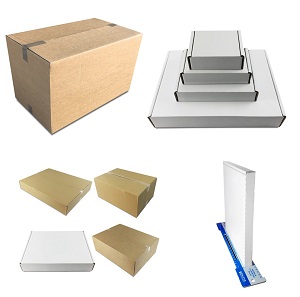
Single wall boxes are multipurpose, lightweight and easy to assemble, made from single wall fluted cardboard. They are the standard choice for domestic shipping and general storage and suit most parcels where the contents are not especially heavy.
They are the most economical option per box, which matters when you dispatch in volume. For heavier goods or long-term stacking, double wall is the safer choice.
Double wall boxes
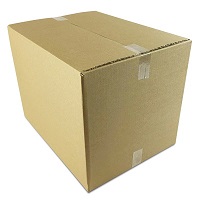
Double wall packaging boxes are made from double wall fluted cardboard, giving a stronger and more rigid carton than single wall. They are commonly used for house moving, storage and shipping heavier items, and are widely used across the removals industry, warehousing and courier despatch.
A large range of sizes is held in stock and available for next day distribution, with an order cut-off shown live on every page so you can see how long is left to order for delivery tomorrow. Cartons can also be made to size, with bespoke printing available for businesses that want their branding on the box.
Large letter and small parcel boxes
These boxes are made to fit Royal Mail's Pricing in Proportion model, so the carton dimensions work with the postage band rather than against it. They are often used as general purpose large letter or small parcel postal boxes.
If you post regularly, matching the box to the postage band is one of the simplest ways to control dispatch costs.
White postal boxes
White die cut pizza style single wall boxes, used as general purpose postal boxes when shipping via Royal Mail or other couriers. The die cut construction folds into shape without tape on the base, and the white finish gives a cleaner presentation than brown board.
E-commerce crash lock boxes
Crash lock boxes have a base that locks into place as the box is opened out, and a peel and seal closure that removes the need for tape while packing. Designed for fast e-commerce packing with good presentation on arrival.
Worth considering if packing speed is a constraint, or if the box itself is part of the customer experience.
M-envelope boxes
Multipurpose rigid cardboard envelopes that can be turned into boxes for added depth. Commonly used by e-commerce businesses packaging and shipping items too thick for a flat mailer but not needing a full carton.
Book wrap mailers
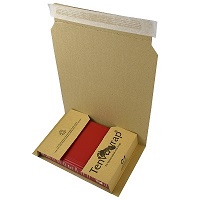
Book wrap mailers are designed to wrap around the item rather than enclose it in a fixed space, so the pack sits tight to the contents. Commonly used to package and post books, documents and CD and DVD cases.
Archive boxes
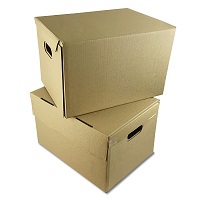
Sturdy archive style boxes with an integrated hinged lid and cut out carry holes. Commonly used for long term storage at home, in offices and across businesses, particularly for documents and records that need to be stacked and retrieved.
Tall and narrow boxes
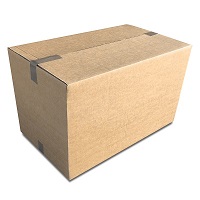
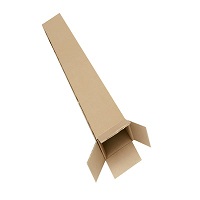
High grade tall and narrow boxes made from single wall fluted cardboard, suitable for golf clubs, umbrellas, cricket bats and similar long items that will not fit a standard carton.
Shell and slide foam lined boxes
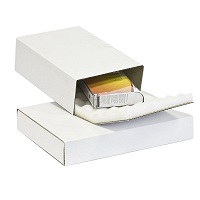
White foam lined premade postal boxes, commonly used to post high value goods. The foam lining holds the item in place and removes the need for separate cushioning.
Pallet boxes
Heavy duty double wall boxes sized to fit pallets exactly, supplied with or without a heat treated pallet. Used for bulk despatch and for consolidating loose goods into a single palletised unit.
Cardboard box packaging
Cardboard box packaging is corrugated board, made from a fluted layer sandwiched between flat liners. The flutes carry the load and absorb impact, which is what separates a corrugated carton from a folding carton or a solid board box.
Single wall against double wall
Single wall has one fluted layer between two liners. Double wall has two fluted layers and three liners, which produces a thicker, more rigid board with higher stacking strength and better resistance to crushing and puncture.
Single wall covers most everyday shipping and storage. Double wall is for heavy goods, long journeys, repeated handling and anything stacked for a long period. If you are unsure, the cost difference per box is usually smaller than the cost of one damaged consignment.
Choosing a size
Measure the item's length, width and height, then allow a margin for cushioning on each face. Boxes are listed by internal dimensions, so the figure you compare against is the item plus its packaging, not the item alone.
Where an item sits between two sizes, the smaller box with adequate cushioning usually travels better than the larger box with a lot of void fill.
Stock boxes or made to measure
Stock sizes cover most requirements and are held ready for despatch. Where a product does not fit a standard size, cartons can be made to size, and bespoke printing is available for businesses that want their branding on the box.
Made to measure is worth considering if you are consistently packing an awkward shape, paying for void fill to compensate, or shipping in enough volume that a small saving per box adds up.
House move boxes
House move boxes are a different job from business packaging. The boxes need to be strong enough to be lifted, carried, stacked in a van and unloaded, often by people who did not pack them.
Cardboard Removal Boxes come in a range of sizes so you can match the box to the contents rather than the room. Removal kits bring together boxes and packing materials in one order, which is simpler than working out quantities from scratch.
What to pack in what
Books, records, tools and tinned goods. Small boxes only. Books are much heavier than they look, and a large box packed with them often cannot be lifted safely. Double wall is the sensible choice.
Kitchenware, crockery and glassware. Small to medium boxes, with each item wrapped individually and the gaps filled. Plates travel better stacked on their edge than laid flat. Use double wall for anything heavy or fragile.
Bedding, duvets, pillows and soft furnishings. Large boxes. The contents are bulky but light, so the box stays liftable even when full.
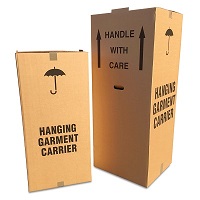
Clothing on hangers. Wardrobe storage boxes are tall double wall garment boxes with a hanging rail, so clothes go straight from the wardrobe to the box without folding. They are made from 150 K/T BC flute with an approximate 7mm wall thickness and are supplied flat packed with the hanging rails separately. Cut out carry handles and a hinged access door make them easier to handle, and a safety bar holds the hangers in place in transit.
Documents and paperwork. Archive boxes, which stack and carry more easily than a standard carton and stay useful after the move.
Fragile and high value items. Wrap first, then box. Bubble wrap, foam and void fill do the protecting, and the box holds it together.
How many house move boxes will you need?
Box quantities vary considerably with how much you own rather than with the size of the property, so treat any published estimate as a starting point. Removal kits are built around typical flat and house moves and are a practical way to order without counting every room.
Order a few more than you think you need. Running short mid-move is far more disruptive than having a few spare boxes, and unused flat packed boxes take up very little space.
Office relocations
Office moves need document boxes for records, double wall cartons for equipment and stock, and protective materials for screens and furniture. Transit blankets and furniture covers protect items that will not go in a box at all.
Cardboard boxes compared
|
Box type |
Main purpose |
Suitable uses |
Key considerations |
|
Single wall boxes |
General shipping and storage |
Everyday parcels and lighter goods |
Less suited to heavy or stacked loads |
|
Double wall boxes |
Stronger protection |
House moves, heavy goods, long-term storage |
Higher cost per box than single wall |
|
Large letter and small parcel boxes |
Postal cost control |
Royal Mail Pricing in Proportion despatch |
Only worthwhile if posting regularly |
|
White postal boxes |
Presentation and speed |
Courier and Royal Mail despatch |
Single wall construction |
|
Crash lock boxes |
Fast tape-free packing |
High-volume e-commerce |
Fixed base size |
|
M-envelope boxes |
Flexible depth |
Thicker items too big for a flat mailer |
Not a substitute for a full carton |
|
Book wrap mailers |
Close-fitting protection |
Books, documents, CDs and DVDs |
Suits flat items only |
|
Archive boxes |
Document storage |
Records at home and in offices |
Built for stacking, not for shipping |
|
Tall and narrow boxes |
Long item protection |
Golf clubs, umbrellas, cricket bats |
Single wall construction |
|
Shell and slide foam lined boxes |
Protective postal packaging |
High value goods |
Foam lining fits particular item sizes |
|
Wardrobe boxes |
Moving hanging clothes |
Suits, coats and dresses |
Large footprint when assembled |
|
Pallet boxes |
Palletised bulk despatch |
Consolidating loose goods |
Requires pallet handling equipment |
Packaging boxes for different products and industries
- E-commerce and mail order. Crash lock boxes or white postal boxes for speed and presentation, with Royal Mail sized cartons where postage banding matters.
- Warehousing and distribution. Double wall cartons for stacking and repeated handling, with pallet boxes for bulk consignments.
- Publishing and media. Book wrap mailers for single items, single wall cartons for larger orders.
- Offices and professional services. Archive boxes for records, retrieval and relocation.
- Removals and storage. Double wall Removal Boxes across a range of sizes, with wardrobe boxes for clothing.
- Manufacturing and industrial. Made to measure cartons where a stock size leaves too much void space around the product.
Recycling and reusing cardboard boxes
Our entire cardboard range is 100% recyclable, so boxes can be reused or recycled responsibly after a move or a despatch cycle. Flatten them before recycling so they take up less space and are easier to process.
Corrugated cardboard has one of the strongest recycling records of any packaging material in the UK. According to the Confederation of Paper Industries, around 80% of paper made in the UK uses recovered fibre, highlighting the important role of recycling in the UK paper and packaging industry. In practice that means a box put out for recycling stands a good chance of coming back as board.
Boxes used once for a house move are usually in good enough condition to be reused, either for storage or for a future move. Keep them flat and dry and check the corners and base flaps before reusing them for anything heavy, since repeated taping and untaping weakens the board over time.
Cardboard contaminated with grease, food waste or heavy tape residue may not be accepted. Removing tape before recycling improves the quality of the material recovered.
Frequently asked questions
What is the difference between single wall and double wall cardboard boxes?
Single wall has one layer of fluting between two liners. Double wall has two layers of fluting and three liners, producing a thicker board with greater stacking strength and better resistance to crushing. Single wall suits everyday parcels, while double wall suits heavy goods, house moves and long-term storage.
What are the best Cardboard Removal Boxes for moving house?
Double wall boxes for anything heavy or fragile, and single wall for lighter belongings such as linen and soft furnishings. Use a range of sizes rather than one size throughout, so heavy contents go into small boxes and bulky light contents go into large ones. Browse our double wall boxes and single wall boxes to compare sizes.
What are the best Boxes for Moving House by room?
Small boxes for books, tools and kitchen cupboard contents. Medium boxes for crockery, glassware and general household items. Large boxes for bedding and soft furnishings. Wardrobe boxes for anything currently on a hanger, and archive boxes for paperwork.
How many house move boxes will I need?
It depends on how much you own rather than the number of bedrooms, so published averages are only a guide. Removal kits are built around typical flat and house moves and take the guesswork out of ordering. Add a few spares.
What size boxes are best for moving house?
Medium boxes are the most useful all round, since they hold a reasonable amount and stay liftable when full. Reserve large boxes for light, bulky items and small boxes for heavy ones. Our double wall Removal Boxes cover the full size range, and removal kits bundle the sizes together for a typical flat or house move.
Where can I buy Moving Boxes UK wide?
Packaging Express supplies moving boxes UK wide, from individual boxes through to removal kits for a full house move. Orders can be placed online or by phone.
What are wardrobe storage boxes used for?
They hold clothing on hangers during a move or in storage. A hanging rail runs across the top of the box, so garments transfer straight from the wardrobe without being folded, and a safety bar holds the hangers in place in transit. See the full wardrobe storage boxes range.
Can cardboard removal boxes be reused?
Usually, yes. Boxes used for a single move are often in good condition afterwards, provided they are kept flat and dry. Check the base flaps and corners before reusing a box for heavy contents, as the board weakens with repeated handling and taping.
Are cardboard packaging boxes suitable for shipping?
Corrugated cardboard is the standard material for parcel and pallet despatch across the UK. Match board strength to the weight of the contents and the length of the journey, and use protective packaging inside the box rather than relying on the carton alone.
Are cardboard boxes recyclable?
Yes. Our entire cardboard range is 100% recyclable, so boxes can be reused or recycled responsibly after your move or despatch. Flatten them and remove tape where practical, as most kerbside collections accept flattened corrugated cardboard.
Can I get cardboard boxes made to a specific size?
Yes. Cartons can be made to size where a stock box does not fit the product, and bespoke printing is available for businesses that want branded packaging.
What else do I need for a house move besides boxes?
Packing tape, marker pens for labelling, and protective packaging for anything breakable. Transit blankets and furniture covers protect items too large to box.
Buy cardboard boxes and packaging supplies online
Browse the full range to order packaging boxes for business despatch, storage and archiving, or Cardboard Removal Boxes and removal kits for a house move. Single wall and double wall boxes are available across a wide range of stock sizes, alongside postal boxes, book wrap mailers, archive boxes, wardrobe boxes and pallet boxes.
Need help choosing cardboard box packaging?
If you are not sure which box or board grade fits your goods, send us the dimensions and weight of what you are packing, how it will be shipped or stored, and roughly how many you send in a typical week. Our team can help you compare sizes, board strengths and stock options, and can advise on made to measure cartons, bulk orders and removals.
Call the customer helpline on 0345 224 3691, request a call back, or use the Contact Us form.
Still not sure?
Our experts are always on hand to help you navigate all our packaging products. You can get in touch by calling the customer helpline on 0345 474 6372, Request a Call Back or by using the Contact Us form.